
Why Accuracy Matters in Precision Optical Components: Alignment, Signal Purity, and Thermal Stability
When it comes to photonics, precision isn’t just a goal; it’s a requirement. Optical systems rely on exact alignments, clean beam paths, and thermally stable environments to perform at peak efficiency. And at the heart of many of these systems are ultra-thin, custom-fabricated metal components that play a critical role in how light behaves.
In high-precision optical assemblies, even microscopic irregularities in metal shims, apertures, or frames can lead to signal degradation, alignment drift, or heat-induced distortion. Whether the application is laser alignment, beam shaping, or optical sensing, photonic system designers must demand extreme precision from every component, starting with the manufacturing process itself.
At FotoFab, we specialize in producing these thin metal parts through a tightly controlled photochemical etching process. Our precision etched components are used across a wide range of photonics applications, including optical benches, laser systems, sensing platforms, fiber-optic alignment, and imaging devices.
This article explores why thin-metal precision is so essential in optical systems and how photo etching offers the accuracy, repeatability, and flexibility today’s engineers need.
Thin-Metal Components in Photonic Systems
Thin metal parts are fundamental in photonics, guiding, aligning, and conditioning light in a variety of platforms:
- Optical benches and mounts rely on metal frames, shims, and alignment parts to hold lenses, mirrors, and fiber couplings in exact locations.
- Laser assemblies depend on beam-shaping grids and precision apertures to maintain coherence and reduce scatter.
- Imaging and sensing systems use thin-metal filters, windows, and mask components to isolate wavelengths and clean up noise.
- Fiber-optic alignment hardware integrates precision shims and plates to ensure consistent coupling and reduce signal loss.
In each of these cases, component geometry and material thickness directly affect performance. Even minute variations can change the angle of refraction, shift beam alignment, or introduce thermal drift.
That’s why etched, high-precision components are the gold standard in these applications.
Optical Alignment: Holding Micron-Level Positioning
Optical paths are unforgiving. A few microns of misalignment can translate to lost signal, reduced resolution, or complete system failure. Thin-metal shims, spacers, and alignment frames help maintain micron-level distances between optical elements.
To perform effectively, these parts must:
- Be perfectly flat and stress-free
- Hold tolerances within ±0.0005″
- Fit seamlessly into mating assemblies without warping or distortion
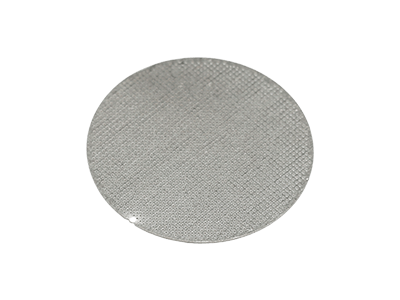
Photochemical etching allows the team at FotoFab to consistently produce parts with tight tolerances and minimal mechanical stress. Unlike stamping or laser cutting, our precision etching process doesn’t introduce burrs or deformation. The result is a part that holds shape, position, and flatness, crucial for maintaining stable light paths.
Beam Path Control & Signal Purity
In photonic systems, signal quality hinges on the control of light. This includes its shape, direction, and purity. Thin-metal components such as apertures, beam-shaping plates, and optical grids are responsible for conditioning the beam before it reaches the sensor or output.
A few key roles of these components include:
- Apertures define the beam’s cross-sectional area
- Grids modulate the beam, remove side lobes, or structure wavefronts
- Shaping plates flatten or elongate beams for scanning or projection
Edge quality and feature precision are everything. A jagged or thermally altered edge can scatter photons, introduce noise, and reduce beam quality. Etched parts excel here with the process producing crisp internal and external features without heat-affected zones or tool wear.
This level of finish ensures minimal scattering and optimal signal purity, even in applications involving infrared, UV, or other high-sensitivity wavelengths.
Thermal Stability & Drift Control
Heat is a constant challenge in optical systems. Lasers, environmental fluctuations, and internal electronics all contribute to temperature change, which can distort optical paths and misalign components.
One solution? Thin metal parts made from low-CTE (Coefficient of Thermal Expansion) materials like Invar or Kovar. These materials expand very little with heat, helping preserve alignment and signal consistency.
Chemical etching enables the use of these exotic alloys without introducing stress or distortion. By avoiding heat and mechanical force during manufacturing, etching produces dimensional consistency across temperature swings.

This thermal reliability is essential in systems like:
- Infrared imagers
- Spaceborne sensors
- Laser projectors
- Photonic test benches
In these cases, even a few microns of shift from thermal drift can compromise accuracy. Thin, stable metal parts provide the control needed to maintain peak optical performance.
Why Thin-Metal Precision Demands Photochemical Etching
Chemical etching (also called photo etching or photochemical machining) stands out as the best method for producing thin-metal optical components, especially when dimensional accuracy, surface quality, and material integrity matter.
Here’s how it compares to other fabrication processes:
| Process | Pros | Cons |
| Photochemical Etching | No stress, burr-free, tight tolerances, ideal for complex internal featuresLow cost toolingFast design changes and and seamless transition from prototype to production | Limited to thin materials (≤0.0625″) |
| Laser Cutting | Good for rapid external cuts, high throughput | Can cause heat-affected zones, burrs, and edge roughness |
| Stamping | High volume efficiency | Tooling cost and longer time for tool creation and retooling, distortion, limited internal feature complexity |
| Machining | High accuracy for thick parts | Expensive and slow for thin materials, prone to warping |
With etching, the process removes metal using light-patterned resist and acid, without any force or heat. The innovative process delivers:
- Burr-free, flat parts with uniform feature definition
- Fine geometries (slots, holes, grids) at high resolution
- Etching from both sides for feature alignment within ±0.001″
- Excellent repeatability and low variation
It’s particularly effective for rapid prototyping optical components during R&D, then scaling to production with the same tooling and process.
FotoFab’s Innovative Photochemical Etching Process
Our chemical etching capabilities are purpose-built for high-precision applications like photonics and optics. With a resolution of ±0.001″, uniform etch depth, and flexible tooling, we help engineers produce components that meet both physical and optical specifications.

Leaders in Precision Optics: How FotoFab Supports Photonics OEMs
At FotoFab, we’ve partnered with photonics engineers across various industries, from space-based imaging to life sciences to communications. Our manufacturing and engineering teams work hand-in-hand with designers to deliver metal components that meet exacting standards for performance and reliability.
Boasting deep expertise in thin-metal photonic components, we’ve built a reputation for manufacturing:
- Custom apertures
- Alignment shims and frames
- Optical encoder disks
- Light-control grids
- Flow-control elements
- X-ray shielding masks
These parts are fabricated from high-performance optical materials, including stainless steel, Invar, titanium, beryllium copper, and nickel alloys, each selected to suit your application’s needs for reflectivity, stability, and conductivity.
What sets FotoFab apart from the rest is our rapid prototyping for optical development. Whether you’re developing a new fiber alignment component or aperture array, our photo etching process allows for fast iteration with no hard tooling. Engineers can test different geometries and material thicknesses at low cost, with prototypes often shipping in just days.
We also offer scalable production. From one-off research assemblies to thousands of commercial components, we scale with your project. Our photochemical machining process supports batch production with consistent quality, making it ideal when you’re ready to move from bench to field.

Precision Metal Makes Precision Light Possible
Photonics is all about control. Control of light, alignment, and signal. And that control starts with the right metal components. Whether it’s an aperture plate defining beam diameter or a shim maintaining micron-level spacing, your system’s performance depends on the smallest details.
Photochemical etching offers engineers the precision, repeatability, and flexibility needed to meet the most challenging optical demands. By working with a trusted partner like FotoFab, you can reduce development time, ensure quality, and improve system performance right from the start.
Ready to build your next optical system with unmatched accuracy?
Contact us today to discuss your next photonics project or request a quote.
