
Precision Etching Services
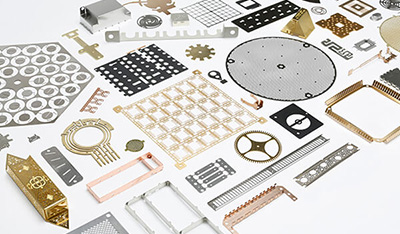
Fotofab’s precision etching services deliver complex, high-accuracy metal components for industries where precision, repeatability, and speed are essential. As a leading provider of photochemical etching solutions, Fotofab helps engineers and manufacturers overcome the limitations of traditional machining with a fast, versatile, and cost-effective manufacturing process.
Our expertise extends beyond the etching process itself. We support customers with forming, plating, diffusion bonding, laser cutting, and other secondary operations to provide ready-to-use components tailored to exact specifications.
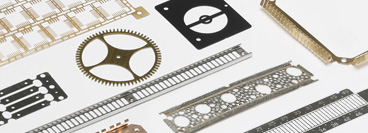
Etching for Precision Metal Parts
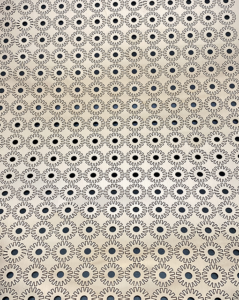
Fotofab’s photochemical etching capabilities offer several advantages over other processes, such as stamping, CNC machining, laser cutting, and wire EDM. By removing material chemically rather than mechanically, our manufacturing process preserves the grain structure of the metal while producing highly accurate parts with tight tolerances and complex geometries.
As a U.S.-based business, Fotofab manufactures and sources materials entirely within the United States, giving customers confidence in quality, traceability, and supply chain reliability.
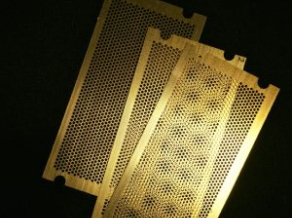
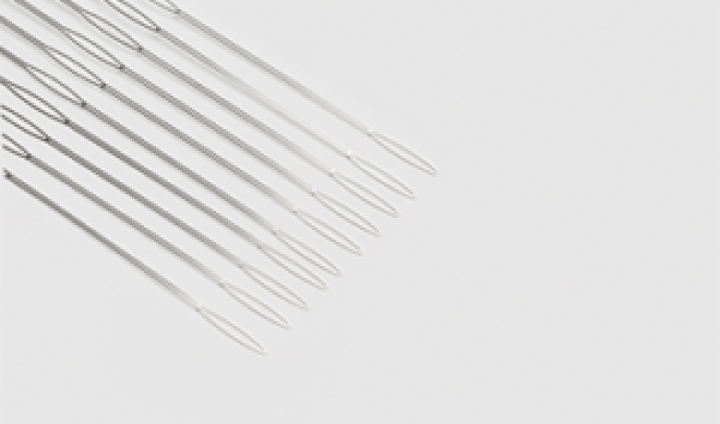
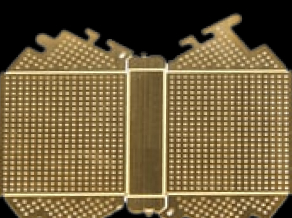
Photochemical Etching Capabilities
Fotofab supports projects ranging from rapid prototypes to high-volume production across various industries, including aerospace, automotive, electronics, medical, telecommunications, and defense.
Our capabilities include:
- Tight tolerance, precision etched parts
- Complex geometries and fine features
- Thin metal processing across a wide range of thicknesses
- Burr-free and stress-free components
- Prototype through production capacity
- Multi-process manufacturing support
- Extensive post-processing and finishing options
Unlike conventional machining or stamping, photochemical etching does not create heat-affected zones or introduce mechanical stress into the material. This allows engineers to develop intricate designs without compromising material integrity.
Benefits of our Chemical Etching Services
Chemical Etching – Photochemical Machining
Faster Production
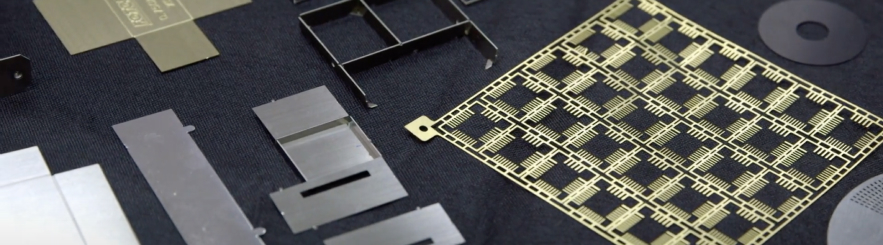
Fotofab’s photochemical etching process is engineered for speed and flexibility. In many cases, chemical etching can be completed in less than a day, helping clients accelerate development timelines and reduce delays associated with tooling or setup.
Standard lead times are between 5-7 days from the order date, with an optional expedited service available.
Inexpensive Phototools
Compared to hard tooling required for stamping or machining, phototools are significantly more affordable and easier to modify. This makes photochemical etching ideal for projects requiring frequent design updates, rapid iteration, or custom design flexibility.
The lower tooling investment also helps reduce upfront costs for prototype and low-to-medium production volumes.
Higher Precision
Fotofab uses state-of-the-art digital imaging machines to precisely map designs onto the metal sheets and eliminate variations so production remains consistent – as do we.
- Photochemical Machining or Chemical Etching has the ability to produce complex geometries within very strict tolerances, and the good news is that increased part complexity is very rarely a cost driver.
- Production Volume – We have the capabilities to help with your prototype and high-volume production orders.
The Photo Etching Advantage
Photochemical etching produces precision metal parts more precisely and with tighter tolerances than metal stamping, laser cutting, CNC machining, and wire EDM.
Chemical etching (photo etching) is a photo-lithographic process whereby a phototool is used to block UV light from exposing the area of a sheet of metal that has first been cleaned and laminated with photoresist. The sheet is then developed to wash away the unexposed photoresist, leaving a very precise mask of hardened photoresist behind. This patterned sheet is fed through concentrated etchants, which dissolve the exposed material, leaving exact-to-print parts.
Fotofab is committed to quality.



Fotofab’s Photochemical Etching Process
Fotofab’s precision photochemical etching process is designed to deliver high-quality metal components with exceptional consistency and repeatability.
Step 1: Material Preparation
The process starts by cleaning and preparing the metal surface to ensure proper adhesion of the photoresist coating. Fotofab works with various metals, including stainless steel, copper alloys, titanium, aluminum, nickel silver, and many specialty alloys.
Step 2: Photoresist Application
A light-sensitive photoresist film is laminated onto the coated metal sheet. This photoresist becomes the foundation for transferring the component design accurately onto the material.
Step 3: UV Exposure and Imaging
Using precision phototools and advanced imaging systems, UV light exposes the desired pattern onto the metal sheet. The exposed areas harden while the unexposed sections are removed during development.
Step 4: Chemical Etching
The sheet then moves through the chemical etching stage, where controlled etchants dissolve the unprotected metal. This manufacturing process creates highly detailed features with excellent repeatability and dimensional control.
Step 5: Inspection and Post Processing
After etching, parts undergo inspection and any required post-processing operations, including forming, plating, passivation, diffusion bonding, electropolishing, laser cutting, or custom packaging.
This complete approach allows Fotofab to provide solutions that are production-ready and aligned with customer specifications.
Value Added Services for Chemically Etched Parts
Fotofab offers an array of value-added and finishing options to guarantee your project gets closer to the production finish line. While chemical etching is our core capability, we have an extensive list of resources to give you a ready-to-use component, no matter what your requirements, including:
- Forming
- Plating
- Passivation
- Diffusion Bonding
- Electropolishing
- Custom Packaging
- Laser Cutting & More
Ideal Applications for Precision Etched Parts
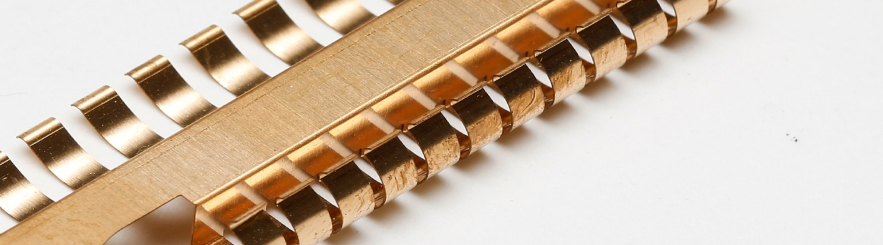
Photochemical etching is ideal for applications requiring thin metal parts, intricate geometries, and tight tolerances.
Common applications include:
- EMI/RFI shielding
- Precision filters and screens
- Encoder disks
- Optical apertures
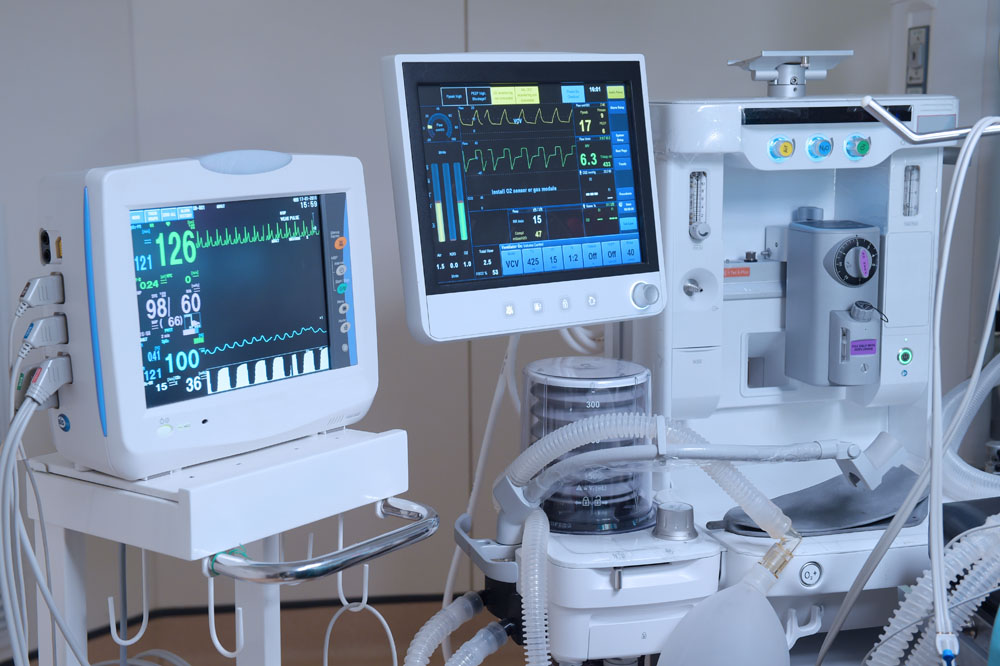
- Medical device components
- Heat exchanger plates
- Battery and fuel cell components
- Aerospace brackets and shims
- Decorative metal components
- Flow control components
Because chemical etching preserves material properties and avoids mechanical distortion, it is especially valuable for applications where precision and reliability are essential.
Available Metals
Explore Metals We Chemically Etch
Here at Fotofab, we provide photochemical machining (chemical etching, acid etching) services for a wide range of metals, including:
| Metal Name | Description | Available Alloys |
| Aluminum | Aluminum is a lightweight, highly conductive, reflective, and non-toxic metal. Its durability and corrosion-resistant properties make Aluminum chemical etching ideal for components in a variety of industries. | 1100, 2024, 3003, 5052, 6061 |
| Beryllium Copper | Beryllium Copper (BeCu) is a pliable metal alloy with high electrical conductivity. Beryllium Copper chemical etching is ideal for applications in electrical and electronic industries, such as contact and spring contact applications. | |
| Brass | Brass is a binary alloy composed of Copper and Zinc. It is similar to Bronze and valued for its workability, hardness, corrosion resistance, and attractive appearance. | C26000 |
| Copper | Copper chemical etching is an excellent process for applications in the electrical and electronic industries. This soft metal possesses high thermal and electrical conductivity and is one of the easier metals to photo-chemically machine or etch. | C11000, C10100, C51000, C71500, C77000 |
| Stainless Steel | Stainless Steel, an iron-based alloy enriched with Chromium and Nickel, is known for its exceptional physical strength and resistance to corrosion. | 301, 304, 316, 17-7 PH |
| Steel | Steel is a ferrous alloy metal, composed primarily of Iron, Carbon and other elements added depending on the characteristics desired. Steel is highly durable with a hardness that resists external strain over time. | 1008, 1010, 1075, 1095 |
| Titanium | Titanium is a corrosion resistant metal with strong and lightweight properties. | Grade 2, Grade 5 |
| Nickel | Nickel is a silvery-white lustrous metal with a slight golden tinge. It belongs to the transition metals and is one of only four elements that are magnetic near or room temperature. | 200, 201 |
| Nickel Silver | Nickel Silver is an electronic-grade alloy with high thermal and electrical conductivity characteristics. Despite the alloy’s name and shiny appearance, it contains no Silver. | C71500, C77000 |
| Phosphor Bronze | Phosphorus Bronze is a tough alloy characterized by high strength, low coefficient of friction, and fine grain structure. | C51000, C52100 |
| Kovar | Kovar is a Nickel-Cobalt ferrous alloy invented to meet the need for a reliable glass-to-metal seal required in electronic devices. | F15 |
| Invar | Invar is a Nickel-Iron alloy notable for its low coefficient of thermal expansion. Like other Nickel/Iron compositions, Invar is a single-phase alloy, consisting of around 36% Nickel and 64% Iron. | 36 |
Have a question on a material?
Partner with a Leading Provider of Chemical Etching Services
Fotofab combines decades of expertise, advanced photochemical etching technology, and responsive customer support to help engineers solve complex manufacturing challenges.
Whether you need rapid prototypes, precision production components, or fully integrated manufacturing solutions, our team is ready to support your project with the quality, flexibility, and innovation you expect from an industry-leading provider.
