
Precision Metal Components in Test and Measurement Equipment – Why Accuracy Starts with Manufacturing Tolerances
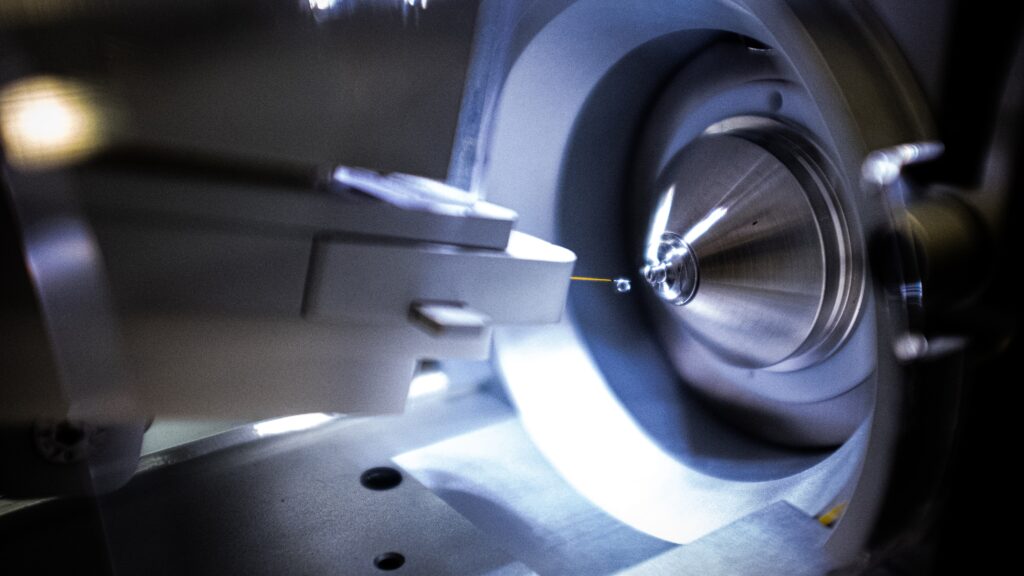
Test & Measurement equipment spans a broad category of highly specialized instruments used to verify, analyze, and calibrate performance across industries. From optical metrology systems and semiconductor inspection platforms to calibration instruments, signal analysis systems, and even a precision digital multimeter, these devices are engineered to measure, validate, and protect critical electrical and mechanical parameters.
In these environments, micron-level dimensional inconsistencies aren’t just minor imperfections; they directly influence calibration stability, optical alignment, signal integrity, and repeatability. Even the slightest deviation can alter diffraction patterns, introduce electrical noise, shift positional accuracy, or compromise measurement resolution. When systems are verifying voltage, analyzing signals, or measuring how components behave under power, even the smallest dimensional variation can affect the results, making dimensional stability essential for accurate measurement.
Accuracy in Test & Measurement doesn’t start when an instrument is calibrated – it starts with how the components inside it are made. Manufacturing tolerances play a major role in overall system performance, and precision photochemical etching provides a stable, repeatable way to produce thin metal components that maintain their geometry without introducing heat distortion or mechanical stress.For OEMs designing next-generation inspection and calibration instruments, photochemical etching offers a precision-driven process that aligns directly with the performance demands of modern test and measurement systems.
How manufacturing tolerances impact measurement accuracy
Tolerance stack-up is a critical factor in high-precision assemblies. When multiple components, grids, shims, encoder disks, frames, and mounts, each carrying dimensional variation, their combined deviation can amplify error across the system. Even when individual parts are technically “in tolerance,” the cumulative effect can degrade performance.
Thermal expansion further complicates matters. Materials subjected to fluctuating operating conditions expand and contract. If components were manufactured with internal stress, heat-affected zones, or micro-distortion, dimensional instability increases over time. Mechanical stress introduced during machining or stamping can create warping or edge deformation that shifts alignment in optical and electronic instruments.
Processes such as laser cutting may introduce heat-affected zones, altering material properties at the edge. Traditional machining can leave burrs or induce mechanical stress that requires secondary finishing. Over time, these micro-variations influence calibration intervals, measurement drift, and signal noise.
Calibration is meant to fine-tune and confirm measurement accuracy. But if the geometry of the components inside the system isn’t consistent, instruments need to be recalibrated more often, and long-term stability suffers. In other words, the quality of the manufacturing process directly affects how reliably a system can calibrate and how consistent its test results will be over time.
The role of precision metal components in electronic test and measurement systems
Precision metal components are not passive structural elements inside measurement equipment; they actively influence accuracy and repeatability.
In optical measurement systems, etched grids and apertures regulate light transmission, filter wavelengths, and control diffraction patterns. In calibration and reference tools, shims maintain critical spacing and alignment tolerances. Semiconductor inspection equipment relies on precision masks and alignment components to ensure accurate wafer inspection. Electronic and RF signal analysis systems use precision shields and patterned metal elements to maintain signal clarity and electrical integrity within sensitive circuits.
Within electronic devices used for measuring and verifying performance, these components help maintain controlled geometries that govern signal flow, spacing, and interaction. Their dimensional integrity determines whether a system performs as designed or drifts from specification.Grids, apertures, shims, and encoder disks are therefore performance-critical components, not just simple mechanical parts.
Precision grids: improving signal clarity and alignment
Precision grids are widely used in optical filtering, imaging alignment, and signal separation applications. Uniform spacing and consistent line geometry are essential to maintaining optical clarity and predictable signal behavior.
If grid lines vary in width or spacing, even slightly, light transmission changes. Burrs or distorted edges can scatter light, introduce unwanted diffraction artifacts, or degrade measurement accuracy. In imaging systems, this directly impacts alignment precision and repeatability.
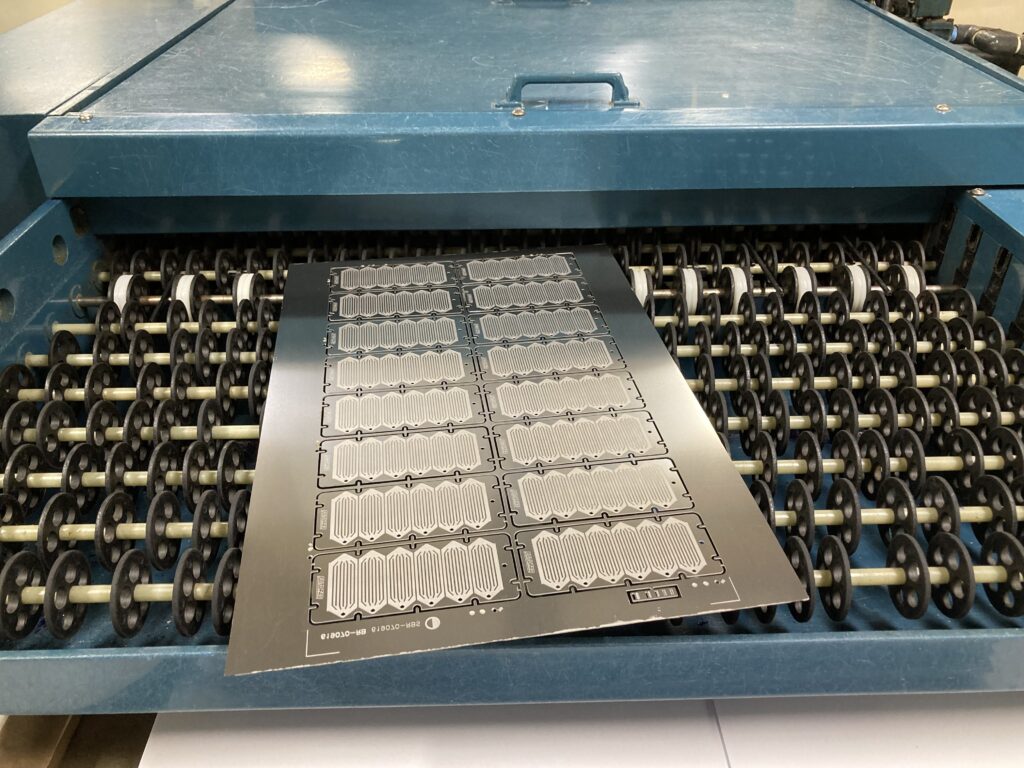
Photochemical etching produces grids with consistent line widths, sharp edges, and uniform spacing across the entire sheet. Because the process is non-contact and stress-free, thin materials remain flat and dimensionally stable. This consistency ensures that production runs maintain identical geometry, which is critical for calibration-sensitive applications.
Apertures: Controlling Light, Signals, and Measurement Accuracy
Apertures are essential to laser-based and optical measurement systems, regulating light intensity, shaping beam profiles, and controlling signal pathways.
Edge quality directly affects diffraction patterns and signal clarity. Rough or thermally hardened edges can distort signals, reducing measurement fidelity. In high-resolution optical instruments, even micro-scale imperfections can compromise alignment and repeatability.
Photochemically etched apertures offer symmetrical, burr-free edges with precise micro-feature accuracy. The absence of heat-affected zones preserves material integrity, enabling consistent calibration performance and reliable measurement consistency over time.
Shims & Spacers: Maintaining Calibration Consistency
Shims and spacers are often overlooked, yet they play a critical role in maintaining alignment and critical distances within calibration instruments.
Mechanical stress or warped components can shift the alignment by enough microns to alter the measurement output. Stamped or machined shims may carry residual stress or slight warping, affecting flatness and long-term dimensional stability.
Photochemical etching produces stress-free, flat shims with tight thickness control. Without mechanical deformation or thermal distortion, etched shims maintain consistent geometry across operating conditions. This contributes directly to long-term system stability and reduces the need to recalibrate frequently.
Encoder disks: accurate motion and position measurement
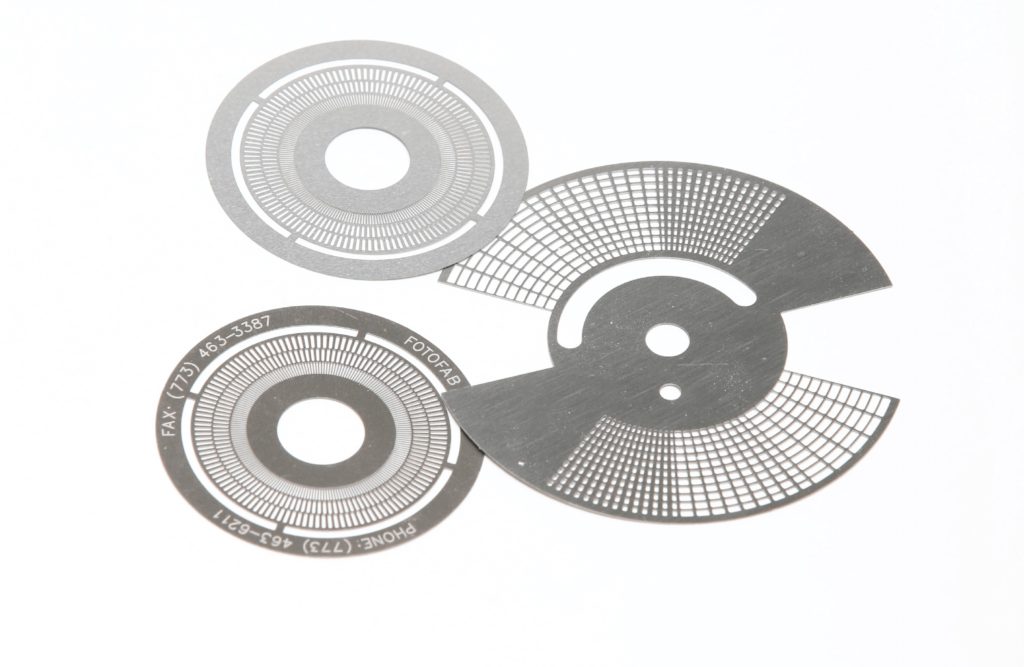
Encoder disks play a key role in rotational and linear position measurement systems. Their performance depends on uniform feature geometry and precise spacing.
Any variation in slot width, spacing, or concentricity impacts positional accuracy and resolution. Even minimal deviation can introduce measurement error in motion-control instruments and precision positioning systems.
Photochemical etching enables tight tolerance control and repeatable micro-feature production across thin metal substrates. The result is a superior encoder geometry that maintains accuracy across production runs, supporting stable performance in motion-sensitive systems.
Why photochemical etching outperforms other methods
When compared with manufacturing methods such as laser cutting, photochemical etching delivers performance advantages that directly affect measurement reliability.
- No heat-affected zones: Eliminates thermal distortion and material property changes.
- No burrs or mechanical stress: Maintains flatness and dimensional integrity.
- No tool wear: Tolerances remain consistent throughout production.
- Greater design freedom: Complex geometries, fine features, and dense patterns are achievable without added cost.
- Superior repeatability: Ideal for calibration-critical components.
- Faster iteration: Supports rapid design validation during instrument development.
The outcome is not simply a cleaner part; it’s a more stable measurement system. Performance improvements stem from preserved geometry, consistent tolerances, and stress-free manufacturing.
In precision test and measurement equipment, these advantages directly influence system reliability, safety margins, and the ability to verify electrical parameters accurately.
How Fotofab supports test & measurement OEMs
Fotofab is a trusted partner for manufacturers operating in accuracy-critical environments. With decades of experience producing thin metal components with micro-scale features, Fotofab supports OEMs from prototype through full-scale production.
Rapid prototyping with photochemical etching enables R&D teams to validate designs in days, not weeks, and rapidly scale to full production, maintaining consistency from pilot builds to high-volume runs.
Strict quality control and inspection protocols maintain repeatability across production runs. This consistency is essential for calibration-driven applications where dimensional stability directly affects instrument accuracy.
Delivering precision parts in days, Fotofab aligns its process with the performance demands of modern electronic devices and high-accuracy instruments.
Learn more about how Fotofab supports the Test & Measurement industry.
Metals We Work With
The team at Fotofab etches a wide range of materials and can advise on thickness, performance, and application-specific requirements.
Fotofab works with many materials, including:
- Stainless steels (302, 304, 316, 17-7, and others)
- Copper alloys (copper, beryllium copper, brass, bronze)
- Nickel and nickel-silver
- Titanium
- Molybdenum
- Invar and Kovar for low-expansion optical components
These metals support instruments where stability, sensitivity, and accuracy are mission-critical.
Designing for accuracy in electronic devices starts with the right process
Precision measurement requires precision manufacturing. Whether designing calibration systems, signal analyzers, semiconductor inspection platforms, or electronic instruments that monitor circuit behavior, tolerance control is foundational to system performance.
With even minor geometric deviations influencing performance, it’s critical to eliminate thermal distortion, mechanical stress, and burr formation. And photochemical etching delivers exactly that.
Accuracy does not begin when you calibrate an instrument. It begins with the manufacturing process. For OEMs designing accuracy-driven equipment, selecting the right fabrication method is essential to achieving consistent performance, reliable test results, and stable operation across the product lifecycle.
Fotofab’s expertise in precision photochemical etching enables engineers to design with confidence, knowing their grids, apertures, shims, and encoder disks will perform exactly as intended.
Why Test & Measurement Companies Partner with Fotofab
Leading T&M companies choose Fotofab because we consistently deliver the reliability, accuracy, and scalability their instruments demand.
With decades of engineering expertise in ultra-precise thin-metal parts and long-standing experience supporting world-class T&M manufacturers, we produce components with the repeatability required for calibration-critical tools.
From rapid prototyping through full production, our commitment to continuous improvement and precision engineering ensures every part strengthens the integrity of your measurement systems.
