
Engineering Materials Reference: Material Properties, Applications & Etchability
Material selection is one of the most important decisions in any precision component design. Long before tolerances, geometries, or production volumes are finalized, engineers must determine whether a material can meet the performance requirements of the application while remaining suitable for manufacturing.
For photochemical etching, material choice directly influences feature resolution, dimensional stability, achievable tolerances, yield, and long-term component performance. Properties such as hardness, grain structure, thermal conductivity, corrosion resistance, and thickness all affect how a material behaves during the etching process and throughout its service life.
Selecting the wrong material can create manufacturability challenges, increase costs, limit achievable geometries, or compromise performance in the final application. Selecting the right material helps ensure consistent production, reliable functionality, and successful integration into larger systems.
This Materials Reference Hub provides engineers with a practical overview of commonly etched metals, their key characteristics, typical applications, and design considerations. It’s here to support you through early-stage material evaluation and help identify suitable options before detailed design work begins.
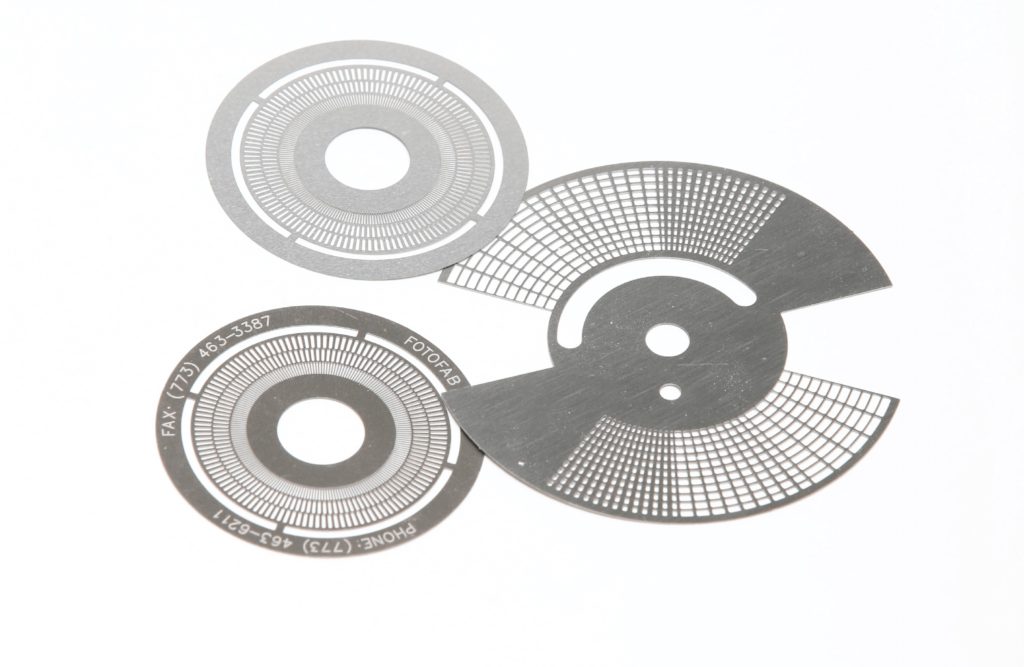
Material Selection Considerations for Photochemical Etching
Etchability and Feature Resolution
Not all metals etch the same way.
Etchability refers to how predictably a material responds during the photochemical etching process. Materials with consistent grain structures and favorable chemical characteristics generally support tighter tolerances and finer feature resolution.
Some materials allow extremely small apertures, intricate patterns, and dense feature spacing. Others may require design adjustments to compensate for etch factor limitations.
Understanding etchability early helps reduce development risk and improve manufacturing consistency.
Mechanical Properties and Material Performance
The mechanical properties of a material often drive initial selection decisions.
You may choose to prioritize:
- Strength
- Hardness
- Elasticity
- Ductility
- Fatigue resistance
- Wear resistance
Certain applications require flexible spring materials, while others demand rigid structural components that maintain dimensional stability under load.
Many material decisions involve balancing etchability against required mechanical performance.
Thermal Behavior
Thermal properties play a critical role in many engineering applications.
Key considerations include:
- Thermal conductivity
- Coefficient of thermal expansion
- Temperature stability
- Thermal cycling resistance
These factors become particularly important in semiconductor systems, aerospace assemblies, and RF devices, where temperature fluctuations can affect performance.
Electrical and Magnetic Performance
Electrical engineering applications frequently require specific conductivity or magnetic characteristics.
Materials may be selected for:
- Electrical conductivity
- Magnetic permeability
- Signal shielding
- RF performance
- Electrical properties under varying temperatures
In some cases, magnetic behavior is the primary material selection factor.
Application-Driven Selection Constraints
Real-world material selection is rarely based on a single property.
It’s critical for design teams to evaluate:
- Functional requirements
- Manufacturing processes
- Environmental exposure
- Cost considerations
- Regulatory requirements
Balancing these variables often requires tradeoffs between performance and manufacturability.
Common Metals Used in Precision Photochemical Etching
Fotofab has extensive experience producing precision-etched components across a broad range of engineering metals. Through decades of photochemical etching development, our team has worked with materials used in aerospace, medical, semiconductor, RF, electronics, and industrial applications where material selection directly impacts manufacturability and performance.
The following materials represent some of the most commonly specified metals for precision photochemical etching.
Etchability at a Glance
Use the table below to compare etchability and primary applications across commonly specified metals. Select a material name to jump to its full profile.
| Material | Etchability | Typical Applications |
|---|---|---|
| Kovar® | Good | Semiconductor packaging, hermetic seals, aerospace electronics |
| Molybdenum | Moderate | Semiconductor equipment, X-ray components, high-temperature assemblies |
| Beryllium Copper | Excellent | Electrical contacts, springs, RF components, connectors |
| Phosphor Bronze | Excellent | Contacts, springs, connectors, precision electronics |
| Mu Metal | Good | Magnetic shielding, sensors, scientific instrumentation |
| Stainless Steel | Excellent | Medical devices, aerospace, industrial, precision instruments |
| Titanium | Good | Aerospace, medical implants, defense, precision instruments |
| Aluminum | Excellent | Electronics, aerospace, thermal management, RF components |
| Brass | Excellent | Decorative components, electrical systems, mechanical assemblies |
| Inconel | Moderate | Aerospace engines, energy systems, high-temperature equipment |
Material Profiles
Kovar®
Key Properties
Kovar is a nickel-cobalt ferrous alloy known for its controlled thermal expansion characteristics.
Typical Applications
- Semiconductor packaging
- Electronic housings
- Hermetic seals
- Aerospace electronics
Design Considerations
Kovar is frequently selected when thermal expansion matching between metal and glass or ceramic materials is required.
Common Components
- Hermetic package frames
- Precision electronic packages
Molybdenum
Key Properties
Molybdenum offers excellent high-temperature performance, dimensional stability, and thermal conductivity.
Typical Applications
- Semiconductor equipment
- Aerospace systems
- X-ray components
- High-temperature assemblies
Design Considerations
As one of the more brittle materials used in precision manufacturing, molybdenum requires careful handling during design and assembly.
Common Components
- Apertures
- Thermal control components
Beryllium Copper (BeCu)
Key Properties
Combines high strength with excellent electrical conductivity and fatigue resistance.
Typical Applications
- Electrical contacts
- Springs
- RF components
- Connector systems
Design Considerations
Widely used where spring performance and conductivity must coexist.
Common Components
- Contact springs
- Shielding contacts
Phosphor Bronze
Key Properties
Offers good strength, corrosion resistance, and spring characteristics.
Typical Applications
- Electrical contacts
- Springs
- Connectors
- Precision electronic components
Design Considerations
Often selected as a lower-cost alternative to BeCu while maintaining excellent electrical properties.
Common Components
- Connector springs
- Electrical contacts
Mu Metal
Key Properties
Extremely high magnetic permeability.
Typical Applications
- Magnetic shielding
- Sensors
- Scientific instrumentation
- Aerospace electronics
Design Considerations
Magnetic performance depends heavily on processing and post-manufacturing handling.
Common Components
- Magnetic shields
Stainless Steel
Key Properties
One of the most widely used material families in photochemical etching. Provides:
- High corrosion resistance
- Good formability
- Strength
- Wear resistance
Typical Applications
- Medical devices
- Aerospace components
- Industrial equipment
- Precision instruments
Design Considerations
Different stainless steels offer varying balances between corrosion resistance, strength, and formability.
Example Components
- Medical components
- Shims
- Screens
Titanium
Key Properties
Titanium and titanium alloys offer an exceptional strength-to-weight ratio combined with high corrosion resistance.
Typical Applications
- Aerospace industry
- Medical implants
- Defense systems
- Precision instruments
Design Considerations
A preferred material where light weight and durability are critical.
Common Components
- Implant components
- Aerospace structures
Aluminum
Key Properties
Aluminum provides excellent thermal conductivity and low density.
Typical Applications
- Electronics
- Aerospace and automotive industries
- Thermal management systems
- RF components
Design Considerations
Ideal for lightweight designs requiring good heat dissipation.
Common Components
- EMI shields
- Heat spreaders
Brass
Key Properties
Combines machinability, conductivity, and corrosion resistance.
Typical Applications
- Decorative components
- Electrical systems
- Precision mechanical assemblies
Design Considerations
Brass is often selected for etched components that require conductivity, corrosion resistance, and a finished appearance.
Common Components
- Nameplates
- Contacts
Inconel
Key Properties
Nickel-based superalloy with exceptional temperature and corrosion resistance.
Typical Applications
- Aerospace engines
- Energy systems
- High-temperature equipment
Design Considerations
Provides excellent performance under extreme operating conditions.
Common Components
- Thermal management and aerospace parts
Have a question on a material?
Applications by Etched Material
Different applications place different demands on material performance.
The following examples highlight how common etched metals are selected based on their mechanical, thermal, electrical, and manufacturing characteristics.
Aerospace and Defense Components
The aerospace industry frequently requires materials that combine high strength, low weight, and environmental resistance.
Common choices include:
These materials support demanding engineering applications where reliability and precision are critical.
Semiconductor Equipment
Semiconductor manufacturing systems often require materials with controlled thermal properties and dimensional stability.
Frequently specified materials include:
These materials help maintain precision throughout temperature fluctuations and manufacturing environments.
Medical Devices
Medical applications require biocompatibility, corrosion resistance, and precision.
Typical materials include:
These materials are commonly used in precision medical components where corrosion resistance, biocompatibility, and dimensional accuracy matter.
RF and Electronics Systems
Electrical engineering applications often prioritize conductivity and shielding performance.
Common selections include:
Material choice often depends on required electrical properties and signal performance.
Shielding and Precision Micro-Components
Many precision micro-components require thin geometries and tight tolerances.
Materials commonly used include:
Their physical properties support highly detailed etched geometries.
Choosing the Right Material for Photochemical Etching
Performance vs Manufacturability
Many engineers focus first on performance.
However, manufacturability is equally important.
The best material is often the one that balances:
- Mechanical performance
- Cost
- Availability
- Manufacturing efficiency
- Long-term reliability
Etchability vs Mechanical Properties
Some materials offer exceptional strength but present greater manufacturing challenges.
Others etch extremely well but may not provide sufficient mechanical performance.
Understanding this balance early can reduce redesign cycles and improve project outcomes.
Design Constraints for Tight-Tolerance Etching
Feature size, spacing, material thickness, and geometry all affect achievable tolerances.
Very brittle materials may require modified design approaches, while certain metal alloys support exceptionally fine detail.
Considering these constraints early helps improve yield and repeatability.
When to Involve a Materials Engineer
Early collaboration often prevents costly redesigns.
A materials engineer can help evaluate:
- Material suitability
- Manufacturing risk
- Feature feasibility
- Thermal behavior
- Long-term performance
Because materials engineers work at the intersection of design, performance, and manufacturing, their input is often valuable before designs are finalized.
As materials science continues advancing through emerging materials, composite materials, smart materials, and new materials that combine metallic or nonmetallic elements with other elements, early engineering evaluation becomes increasingly important.
Speak with an Engineer
Early material decisions often determine project success. Selecting the right material at the start can improve manufacturability, reduce development risk, and help achieve the performance requirements of the final component.
Discuss material selection, etchability, tolerances, and manufacturing considerations with a Fotofab engineering specialist today.
Our team works closely with engineers and materials scientists to evaluate material suitability, manufacturing feasibility, thermal performance, and long-term reliability before designs are finalized.
Request a Quote
Need assistance selecting a material for precision photochemical etching?
Send a drawing or tell us what you need, and we’ll send a quote right away.
Available Metals
Explore Metals We Chemically Etch
Here at Fotofab, we provide photochemical machining (chemical etching, acid etching) services for a wide range of metals.
Fotofab is committed to quality.




Value Added Services for Chemically Etched Parts
Fotofab offers an array of value-added and finishing options to guarantee your project gets closer to the production finish line. While chemical etching is our core capability, we have an extensive list of resources to give you a ready-to-use component, no matter what your requirements, including:
- Forming
- Plating
- Passivation
- Diffusion Bonding
- Electropolishing
- Custom Packaging
- Laser Cutting & More
